


What are alebrijes?
Alebrijes are a Mexican handicraft made of copal wood in Oaxaca. It is a fantastic figure that combines physiognomic elements of various animals, whether real or imaginary, and are characterized by being painted in vibrant colors. The wooden alebrijes are a traditional artistic expression of Oaxaca, Mexico, that combines artisan skills with creativity and cultural symbolism. These pieces are hand-carved wooden sculptures, usually from the Oaxaca tree. copaland painted with vivid colors and detailed designs. They represent fantastic and surrealistic creatures that may be a combination of various animals or imaginary beings.
More than craftsmanship, some consider these pieces to be true works of art. The knowledge for the elaboration of wood carvings is a process that is acquired from generation to generation. The inhabitants of Tilcajete are born and grow up closely linked to the elaboration of figures as part of the family environment; they live among the piles of copal trunks, with the tools, the painting or the process itself: the carving, the painting and the exhibition of pieces for commercialization in their homes. Thus, children and young people are learning this trade from the older ones.
Although alebrijes originated in Mexico City, artisans in other parts of the republic soon perfected them. This is particularly true in Oaxaca, where several artisans, such as the Muñoz Ríos family, combined the traditional carved wood crafts of the area with their own ideas. Some artisans claim to traditionalists for belonging to a culture that keeps everything inherited from their ancestors. The grandparents made the pieces for family domestic use; in the past few were prepared and it is said that they were objects for play or utilitarian: toys for children, spoons, resting benches, yuntas, carts, nativity scenes, saints, little angels and animals of the region, cats, dogs, donkeys or horses, although elephants, lions or giraffes were also elaborated. The Oaxacan alebrijes are made with copal wood and are inspired by the idea of the nahualesThese are supernatural beings that have the ability to transform themselves into animals. This way of making alebrijes spread to other towns, and today there are three main communities that specialize in the creation of the carved wooden figures: San Antonino Arrazola, San Martín Tilcajete and La Unión Tejalapam. It is estimated that today there are about 150 families of artisans who are fully dedicated to the production of alebrijes.
Origin and Significance
Although alebrijes originated as papier-mâché figures created by Pedro Linares in Mexico City in the 1930s, Oaxacan artisans adapted this idea to the use of wood. These figures symbolize the connection with the spiritual world and the richness of nature. Some people consider the alebrijes to be "protective animals". or spiritual guides, reflecting the indigenous cosmovision.
There are figures of a very diverse fauna and fantastic beings of external influences that create a cultural connection, from monsters, pegasus to tonas and nahuales, expressions of the cosmovision of the original groups of Oaxaca.
Creation Process
- Wood selectionCopal wood is ideal for its ease of carving.
- SizeUsing machetes and fine tools, the artisans carve each piece by hand.
- DryingThe wood is left to dry to prevent cracking.
- DecorationThe figures are painted with meticulous patterns and vivid colors. The designs usually include elements of Oaxacan flora, fauna and mythology.
Alebrijes today
Today, alebrijes are an undeniable part of Mexico's cultural and artistic imagination, and it is a craft in constant evolution. Since 2007, the Museum of Popular Art of Mexico City organizes a parade of monumental alebrijes with the intention of promoting the arts and Mexican folk culture. In it, hundreds of artisans build alebrijes up to four meters high and parade them through the historic center of the city in an event full of dance, music and color.
A couple of years ago, the museum decided to take this event a step further by organizing night parades, this time with illuminated alebrijes. The same large size but made of cardboard and LED lights, these huge constructions prove that the alebrijes tradition is here to stay.
Currently, the elaboration of these crafts is the basis of the economy in Tilcajete. In some houses everyone works in the process of carving, painting and commercialization. In the 80's, the promotion of Oaxaca's handicrafts made possible the promotion of Tilcajete's carvings, which increased sales and the development of talents. This boom also arose from the work of families who, perhaps in a visionary manner, foresaw a good income from the taste and demand for their wooden figures in both the local and international tourist market.
During that decade, the economy of the town began its transformation, as agricultural activities gradually decreased and migration contracted. better quality of life thanks to the progress of the family economy due to the production of handicrafts. Between 1985 and 1989 there was a decline in trade. It is likely that demand decreased due to the saturation of these figures in the market; also, the repetition in the forms or the lack of innovation had an impact on the fall. Later, in the 1990s, there was a new boom and since then more families have dedicated themselves to this work.
Copal. To give the first shapes, the macheteThe knife to continue carving what they call rustic shapes, and finally the blade to give the fine finish. Copal is the wood used, at the same time resistant and not very hard. Before, the artisans went to the nearby hills to cut the wood, only the necessary for the work, but due to the high production of this craft, the copal of the region was diminishing until it was almost extinct, which forced the creators to bring it from farther and farther away. For this reason, there are individuals dedicated to the exploitation and transportation of the wood. The copal trees are small and grow like chaparrones, so it is not possible to extract a large amount of wood from them, which forces them to make the most of each trunk and each branch.
Currently, copal is brought from different regions of Oaxaca, from the Huatulco canyon and from the Valleys, and although there are different qualities -some are softer, others harder, some brittle and others with too many knots-, the artisans prefer the wood from the region itself. For this reason, and to improve the quality of the wood, as well as to reduce costs, several hectares have been planted on land belonging to the population. Copal has always been used for these figures, because it is a wood that grows well in the hills; the tree sticks easily, does not require much water or great care, although it is necessary to work every week and the planting must be protected from looting or possible fires. Copal is cut between six and seven years of age..
Figures.- In the past, they were produced only animalsbut then they changed. The young people began to work with other figures, contributing new ideas. Before, no dragons were made; then they began to make monsters, then followed the little martian and from there what the inventive craftsmanship and the acceptance of the buyers demanded. With the increase in exports, buyers are asking for more creative figures, not so repetitive. In spite of this, pieces are made that look like manufactures because of their similarity, although although the figures may be similar in shape and proportions, in general the painting makes them different. Some shapes are repeated, hence they are considered the most commercial, such as dogs, armadillos or iguanas, but the figures not only represent the local fauna, including domestic animals, but also those of the local fable. Since the 80's, artisans began to elaborate different figures: giraffes, dogs, cats, elephants, zebras, deer and all kinds of animals, including dolphins, sharks and other fish.. Then came the carving of fantastic figures, dragons and little martians. From then on, confusion arose.
They say in Tilcajete that a person noticed how this type of work was selling well and that it was enjoying a certain popularity; then he thought of making them in wood, since cardboard has the disadvantage of easy deterioration and without a doubt they would last longer in wood. Since then they kept that name and over time not only made these figures, but animals with many imaginary elements. Finally, there is another version in Arrazola, a town where this type of handicraft is also made. It is said that at the beginning of the 80's Pedro Linares visited with some relatives and showed them some of his alebrijes, and Manuel Jiménez decided to make fantastic beings, typical of his cosmovision, but carved in wood and with the style of the local craftsmanship.
You can see some works and if you want to know all his work we invite you to visit our section alebrijes
-
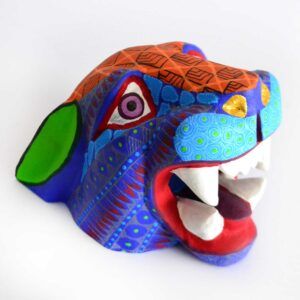 SALE
SALEAlebrije - Head of Jaguar
AMAL 00819MXN $ 2,500.00There is 1 in stockJaguar head made of wood and hand painted by...Add to cart -
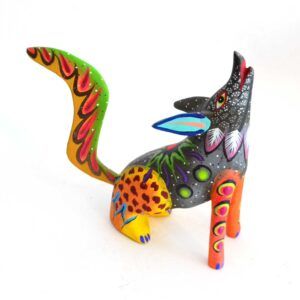 SALE
SALEWolf Alebrije
AMAL 00074MXN $ 1,200.00There is 1 in stockFigure of a wolf carved in wood and hand painted by...Add to cart -
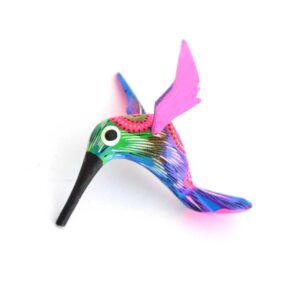 SALE
SALEAlebrije - Hummingbird
AMAL 00011MXN $ 150.00There is 1 in stockFigure of hummingbird carved in wood and hand painted by...Add to cart -
 SALE
SALERabbit Alebrije
AMAL 00886MXN $ 1,250.00There is 1 in stockRabbit made of wood and hand-painted by artisans...Add to cart




